Union of Women of Russia: Balashikha Digital Portal
A working MVP of a digital platform for the Balashikha chapter of the Union of Women of Russia. The project combines a public website, membership onboarding, a member cabinet, digital membership card, events, partner and cooperation flows, an administrative interface, email notifications, and a Telegram bot.
Product Scope
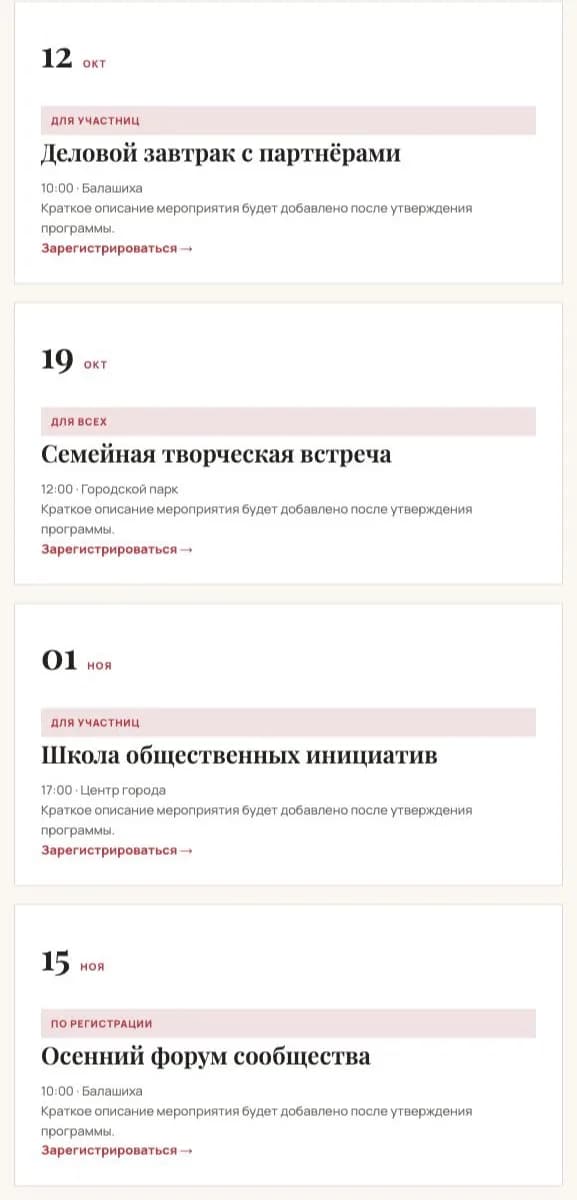
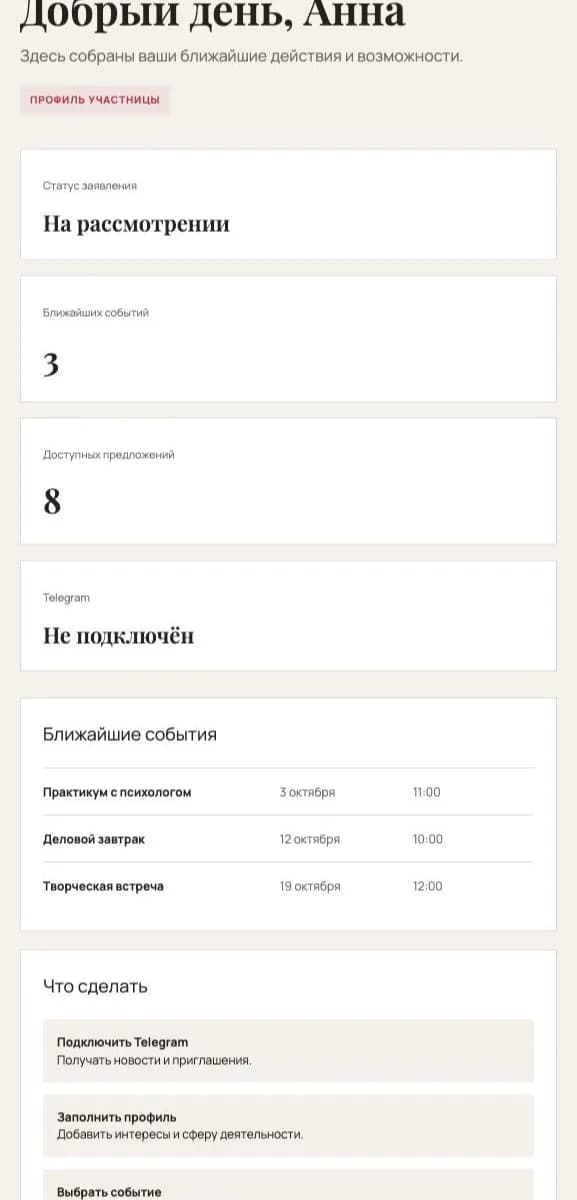
The platform reduces manual work for the chapter and gives members a single digital path from first contact to community participation. Public pages explain the organization, projects, events, documents, contacts, joining flow, and cooperation opportunities. The private area shows membership status, event registrations, partner benefits, notification settings, and Telegram connection.
Membership And Digital Card
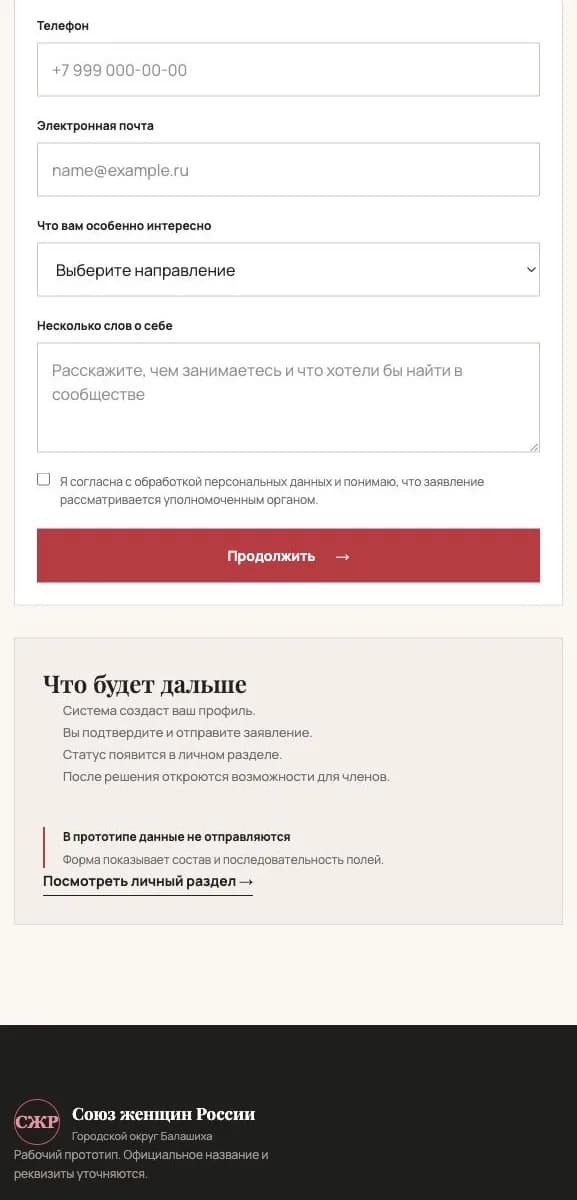
The system separates simple site registration from official membership status. A visitor submits a membership application, the backend validates consent versions and contact data, and administrators process the application in the admin panel. Approved members receive a permanent number in the SJR-BAL-000001 style and a QR-based public verification card that exposes only safe status information.
Backend And Operations
The backend is a modular Node.js service using PostgreSQL as the source of truth. It exposes public, authenticated user, administrative, and internal Telegram APIs, with server-side sessions, rate limits, JSON logs, request IDs, readiness checks, Prometheus metrics, and OpenAPI validation. The production stack runs through Traefik with separate frontend, backend, database, notification worker, and Telegram bot containers.
Telegram And Notifications
The Telegram bot supports login, status, digital card, events, news, benefits, and controlled access to the community chat. Email notifications are handled by a separate worker and queue, including event announcements, reminders, and account flows.
Delivery Quality
The project includes product discovery materials, a current API contract, system architecture documentation, SQL migrations, Docker integration smoke tests, OpenAPI checks, frontend render tests, backend tests, Telegram bot tests, coverage thresholds, GHCR image publishing, staging and production deployment, backups, and release-readiness runbooks.
Media Gallery